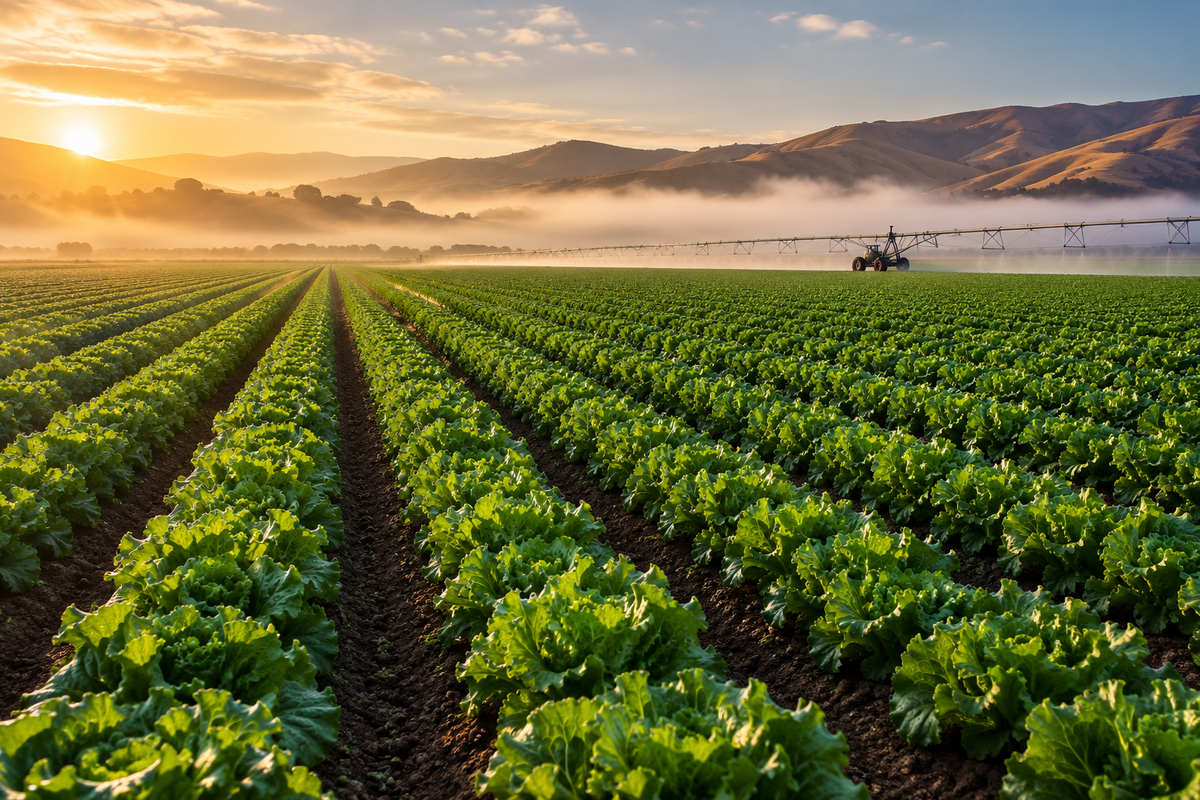
Tucked between the Gabilan and Santa Lucia mountain ranges in Monterey County, the Salinas Valley has earned a nickname most farming regions would envy: the Salad Bowl of the World. Stretch a map of American agriculture across the country, and this roughly 90-mile-long valley punches far above its size producing a huge share of the leafy greens Americans eat every day, from iceberg and romaine lettuce to spinach, celery, and a dozen varieties of specialty greens most people couldn't name.
Why here, of all places?
The valley's magic comes down to geography. Cool marine fog rolls in most mornings off Monterey Bay, tempering what would otherwise be a hot inland climate. That fog, combined with well drained alluvial soil deposited over millennia by the Salinas River, creates near-ideal conditions for cool-season vegetables. Unlike much of the country, the valley can grow crops nearly year-round, with growers shifting fields north and south along the valley floor to chase the best microclimates as the seasons change.
More than just lettuce
While leafy greens get the headlines, the valley's fields produce an enormous range of crops: strawberries, broccoli, cauliflower, artichokes, wine grapes, and row after row of vegetables destined for both fresh markets and the bagged-salad aisle. Companies headquartered here names like Taylor Farms, Tanimura & Antle, and D'Arrigo Bros are recognizable to anyone who's read a salad bag label, and many trace their roots back generations to early 20th-century immigrant farming families.
The people behind the harvest
None of this happens without labor, and the valley's agricultural identity is inseparable from the story of the farmworkers who plant, thin, and harvest by hand. Many crops still resist mechanization, and the workforce historically and today, largely Latino and immigrant has shaped the valley's culture, politics, and economy as much as the soil has. Salinas was also a flashpoint in the farmworker labor movement of the 1970s, when lettuce strikes organized in part by the United Farm Workers drew national attention to wages and working conditions in the fields.
A working landscape, not a postcard
It's worth remembering that "Salad Bowl of the World" isn't just a marketing phrase it describes a working landscape shaped by irrigation infrastructure, packing sheds, cold-storage warehouses, and a logistics network that gets produce from field to refrigerated truck within hours of harvest. Drive Highway 101 through the valley and you'll see it in real time: fields on one side, processing facilities on the other, and trucks lined up loading lettuce destined for grocery stores across the country before the day's fog has even burned off.